 QiMeal
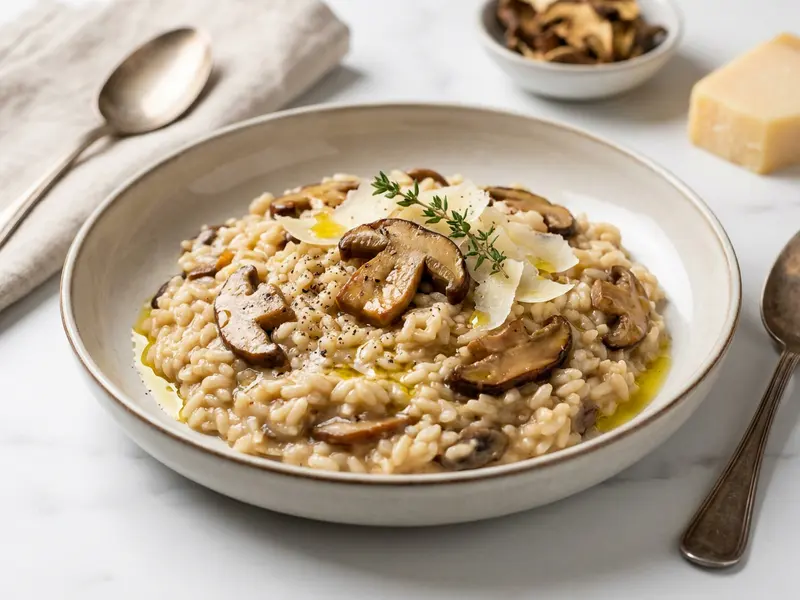
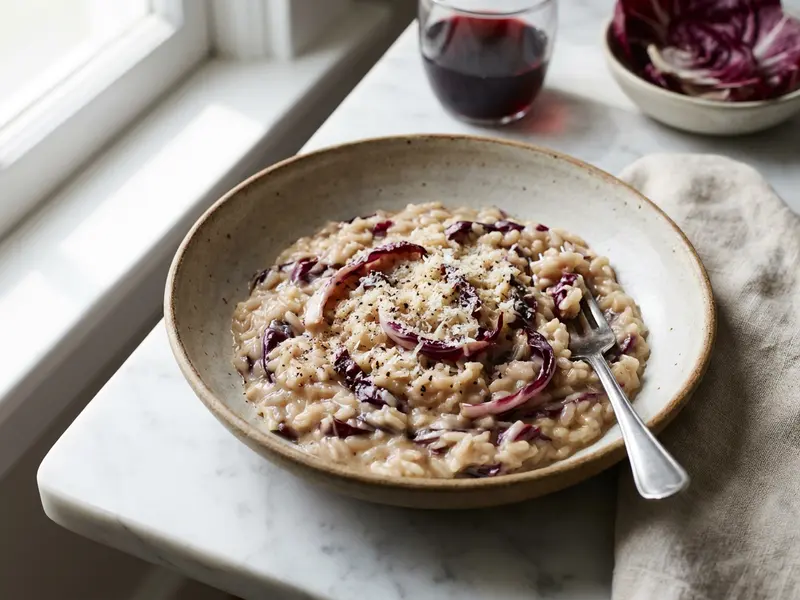
Risotto ai Funghi Porcini
Risotto ai Funghi Porcini · ready in 1 h 4 min · 4 servings · 570 kcal per serving · medium · 10 ingredients
Risotto ai Funghi Porcini is a Northern Italy autumn classic, creamy from patient stirring and fragrant with deep woodland porcini.
- Prep
- 25 min
- Cook
- 39 min
- Total
- 1 h 4 min
- Serves
- 4
- kcal
- 570
- Difficulty
- medium
Ingredients · 4 servings
- 320 gRisotto rice
- 40 gPorcini mushroom, dried
- 1Onion, finely diced
- 150 mlWhite wine
- 60 gParmigiano, finely grated
- 60 gButter, diced
- 20 mlOlive oil
- 1 ⅓ tspSalt
- 1 tspBlack pepper, freshly ground
- 1200 mlWater, hot
Equipment
kettle, stovetop, wide saucepan, small pot, ladle, fine sieve, mixing bowl, knife, cutting board, wooden spoon, lid, serving bowl
Instructions
- Mise en place
Gather the rice, dried porcini, onion, wine, Parmigiano, butter, olive oil, salt, pepper, water, saucepan, ladle, sieve, pot, and spoon. · 5 min
What to look for: All ingredients are measured and tools are within reach.
- Soak porcini
Soak the porcini in 400 ml hot water for 20 minutes, then lift them out, chop them, and strain the soaking liquid through a fine sieve. · 20 min
What to look for: The mushrooms look plump and the liquid is deep brown.
- Warm mushroom water
Pour the mushroom liquid and 800 ml water into a pot, add a pinch of salt, and keep it at a gentle simmer for cooking the rice. · 5 min
What to look for: Small bubbles rise steadily without a rolling boil.
- Soften onion
Heat olive oil and 20 g butter in a wide saucepan, add the onion, and cook gently until soft and translucent without browning. · 6 min
What to look for: The onion is glossy and pale with no dark edges.
- Toast rice
Add the rice and stir for 2 minutes until each grain looks glossy and the pan smells lightly toasted. · 2 min
What to look for: The rice grains are shiny and slightly translucent at the edges.
- Add wine
Pour in the white wine and stir until the pan is nearly dry and the sharp aroma has softened. · 3 min
What to look for: The wine has mostly evaporated and the rice moves slowly in the pan.
- Ladle liquid
Add the chopped porcini, then ladle in hot liquid little by little, stirring often and waiting until each ladleful is mostly absorbed. · 12 min
What to look for: The rice releases starch and the mixture becomes creamy around the grains.
- Check rice
Cook until the rice is creamy with a slight firm center, using more hot liquid only as needed to keep the texture flowing. · 6 min
What to look for: The risotto spreads slowly when the spoon is drawn through it.
- Finish risotto
Remove the pan from the heat, beat in 40 g butter and Parmigiano, season with salt and pepper, cover, and rest for 2 minutes. · 4 min
What to look for: The risotto looks glossy, creamy, and softly wavy.
- Serve risotto
Serve the risotto at once in warm bowls, loose and glossy, with extra black pepper if desired. · 1 min
What to look for: Each portion settles into a creamy mound that gently spreads.
Nutrition (per serving)
| kcal | 570 |
|---|---|
| Protein | 15 g |
| Carbohydrates | 73 g |
| of which sugars | 2 g |
| Fat | 22 g |
| of which saturated | 11 g |
| Fibre | 4 g |
| Sodium | 1035 mg |
Nutri-ScoreB
Allergens
Contains: milk, sulphites
Storage and reheating
- Fridge: up to 3 days
- Freezer: not recommended
- Warm gently with a splash of water, stirring until creamy and steaming throughout.
Ingredient substitutions
Risotto rice
- Arborio rice: Use a rice variety suited to releasing starch for a creamy risotto.
Porcini mushroom
- Fresh porcini mushroom: Use about 200 g fresh porcini and skip the soaking step, while still simmering water for the rice.
Onion
- Garlic: Use only a small amount if onion is unavailable, since garlic gives a sharper base.
White wine
- Water: Use hot water if avoiding alcohol, though the risotto will lose some acidity and aroma.
Parmigiano
- Parmigiano Reggiano: Use freshly grated cheese for the smoothest finish.
Butter
- Olive oil: Use when butter is unavailable, though the final texture will be less creamy.