 QiMeal
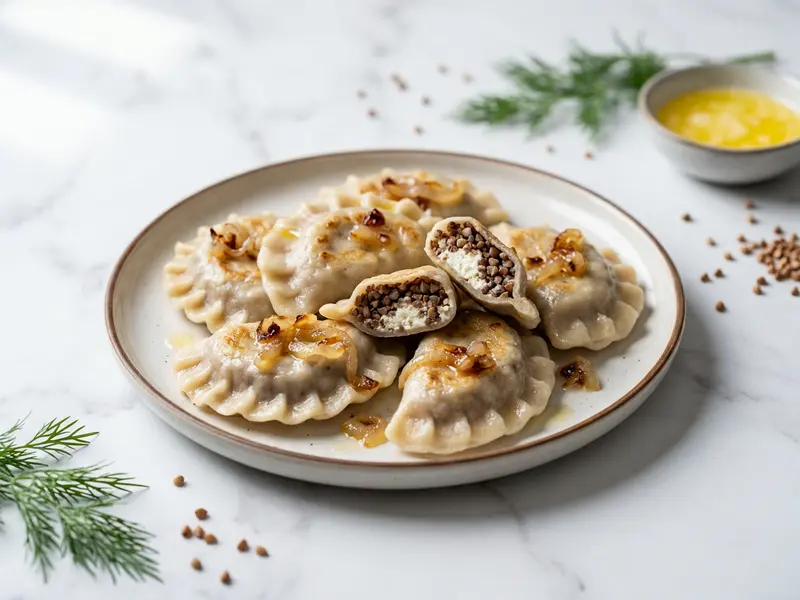
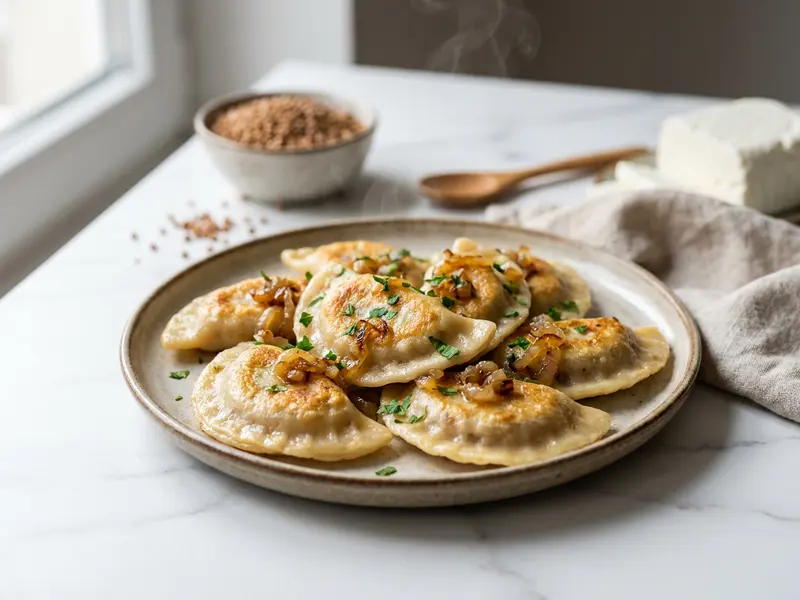
Pierogi z Kaszą Gryczaną i Twarogiem
Pierogi z Kaszą Gryczaną i Twarogiem · ready in 1 h 51 min · 4 servings · 915 kcal per serving · medium · 9 ingredients
Known in some homes as pierogi wiejskie, these rustic dumplings carry the nutty earthiness of buckwheat and the gentle tang of Polish curd cheese.
- Prep
- 1 h 8 min
- Cook
- 43 min
- Total
- 1 h 51 min
- Serves
- 4
- kcal
- 915
- Difficulty
- medium
Ingredients · 4 servings
- 500 gWheat flour
- 2Egg yolk, separated
- 250 mlMilk, warmed
- 200 gBuckwheat groat, dry
- 300 gWhite curd cheese, crumbled
- 120 gOnion, finely diced
- 60 gButter, divided
- 14 gSalt, divided
- 2 gBlack pepper, ground
Equipment
stovetop, large pot, frying pan, mixing bowl, rolling pin, 8 cm cutter, knife, spoon, slotted spoon, sieve, tray, small saucepan
Instructions
- Gather Tools
Gather and measure all ingredients; set out a large pot, frying pan, mixing bowls, rolling pin, 8 cm cutter, knife, spoon, and slotted spoon. · 5 min
What to look for: All ingredients are weighed and tools are within reach.
- Cook Buckwheat
Boil buckwheat groats in salted water until tender, then drain if needed and spread them on a tray to cool completely before mixing. · 20 min
What to look for: Groats are tender, separate, and no longer steaming heavily.
- Fry Onion
Melt 20 g butter in a frying pan, add finely diced onion, and fry over medium heat until soft, sweet, and lightly golden. · 8 min
What to look for: Onion is translucent with pale golden edges.
- Mix Filling
Combine cooled buckwheat, crumbled curd cheese, fried onion, 4 g salt, and black pepper until the filling holds together. · 6 min
What to look for: Filling looks speckled, moist, and cohesive without being wet.
- Prepare Dough
Warm milk to 40°C / 104°F, then mix it with flour, egg yolks, and 4 g salt; knead until smooth and elastic. · 12 min
What to look for: Dough is smooth, soft, and free of dry flour patches.
- Rest Dough
Cover the dough and rest it at room temperature so the gluten relaxes and the surface stays soft for rolling. · 20 min
What to look for: Dough feels supple and springs back gently when pressed.
- Shape Pierogi
Roll dough thin, cut 8 cm circles, place about 20 g filling on each circle, fold, and press edges tightly to seal. · 25 min
What to look for: Pierogi are sealed firmly with no visible gaps or trapped air pockets.
- Boil Pierogi
Boil pierogi in batches in salted water until they float, then cook for 2 minutes more and lift them out with a slotted spoon. · 12 min
What to look for: Pierogi float to the surface and the dough looks slightly translucent.
- Serve Buttered
Melt remaining 40 g butter, pour it over the hot pierogi, and serve at once while the dough is tender and glossy. · 3 min
What to look for: Pierogi are shiny with melted butter and served piping hot.
Nutrition (per serving)
| kcal | 915 |
|---|---|
| Protein | 38 g |
| Carbohydrates | 141 g |
| of which sugars | 8 g |
| Fat | 23 g |
| of which saturated | 13 g |
| Fibre | 9 g |
| Sodium | 1445 mg |
Nutri-ScoreC
Allergens
Contains: gluten, eggs, milk
Ingredient substitutions
Wheat flour
- All-purpose wheat flour: Use the same weight for a classic pierogi dough.
Egg yolk
- Milk: Use only if avoiding egg; the dough will be slightly less rich.
Milk
- Whole milk: Traditional dough works best with warm milk.
Buckwheat groat
- Roasted buckwheat groat: Roasted groats give the most traditional nutty flavor.
White curd cheese
- Farmer cheese: Choose a firm, lightly tangy cheese similar to Polish twaróg.
Onion
- Yellow onion: A standard yellow onion is traditional and fries sweetly.