 QiMeal
Gamjatang
Gamjatang · ready in 3 h 35 min · 4 servings · 466 kcal per serving · medium · 13 ingredients
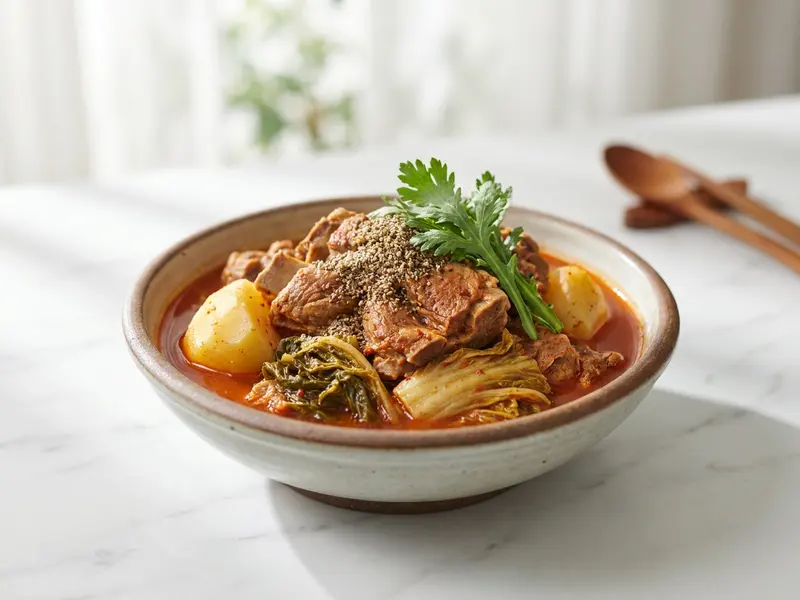
Gamjatang is a hearty Korean stew where pork spine bones simmer into a deep broth with potatoes, perilla seed, cabbage, and a warm red chile glow.
- Prep
- 1 h 12 min
- Cook
- 2 h 23 min
- Total
- 3 h 35 min
- Serves
- 4
- kcal
- 466
- Difficulty
- medium
Ingredients · 4 servings
- 900 gPork spine bone, soaked
- 650 gPotato, peeled and halved
- 50 gPerilla seed, ground
- 300 gNapa cabbage, cut into large pieces
- 30 gGochugaru
- 60 gSsukgat, trimmed (to serve)
- 40 gGarlic, minced
- 45 mlSoy sauce
- 9 gSalt
- 2 gBlack pepper, ground
- 2 LWater
- 5 gSugar
- 1 tbspSesame oil
Equipment
stovetop, stockpot, mixing bowl, knife, cutting board, strainer, ladle, measuring spoon, tongs, skimmer, serving bowl
Instructions
- Prepare Ingredients
Gather measured pork bones, potatoes, perilla seeds, cabbage, ssukgat, seasonings, a stockpot, bowls, knife, board, strainer, and ladle. · 10 min
What to look for: All ingredients are measured and tools are within reach.
- Soak Bones
Soak pork bones in cold water for 1 hour, changing the water once, to draw out blood and keep the broth clean tasting. · 1 h
What to look for: The soaking water turns pink and the bones look cleaner.
- Blanch Bones
Boil the soaked bones in fresh water for 10 minutes, then drain and rinse the bones and pot to remove gray foam. · 10 min
What to look for: Gray foam rises and the bones lose their raw surface color.
- Start Broth
Add bones, 2 l water, garlic, soy sauce, salt, and black pepper to the clean pot, then bring to a steady boil. · 10 min
What to look for: The liquid bubbles steadily across the surface.
- Simmer Broth
Reduce heat and simmer for 90 minutes, skimming foam as needed, until the broth looks milky and pork clings loosely to bone. · 1 h 30 min
When it is done: Pork should reach at least 63°C / 145°F and pull easily from the bone.
- Season Stew
Stir gochugaru, ground perilla seeds, sesame oil, and sugar into the broth until the surface turns brick red and fragrant. · 5 min
What to look for: The broth becomes red, speckled, and slightly thicker.
- Cook Potatoes
Add potato and napa cabbage, then simmer until potatoes are tender but not broken and cabbage has melted into the broth. · 25 min
What to look for: Potatoes hold their shape and cabbage looks soft and translucent.
- Finish Greens
Fold in ssukgat and simmer briefly until the stems soften and the leafy aroma rises from the pot. · 3 min
What to look for: Ssukgat turns glossy green and wilts slightly.
- Serve Stew
Serve the stew very hot in deep bowls, placing bones, potato, cabbage, and broth in each portion with ssukgat on top. · 2 min
What to look for: Each bowl has red broth, tender potato, pork bone, and bright greens.
Nutrition (per serving)
| kcal | 466 |
|---|---|
| Protein | 24 g |
| Carbohydrates | 34 g |
| of which sugars | 5 g |
| Fat | 26 g |
| of which saturated | 8 g |
| Fibre | 6 g |
| Sodium | 1580 mg |
Nutri-ScoreC
Allergens
Contains: gluten, soybeans, sesame, soy
Storage and reheating
- Fridge: up to 3 days
- Freezer: yes, up to 2 months
- Reheat gently in a covered pot until bubbling and the pork reaches 74°C / 165°F throughout.
Ingredient substitutions
Perilla seed
- Sesame oil: Use only when perilla seed is unavailable, since it gives aroma but not body.
Napa cabbage
- Ssukgat: Use as a lighter green element, added near the end.
Gochugaru
- Black pepper: Use only for heat if gochugaru is unavailable, but color and chile fruitiness will change.
Ssukgat
- Napa cabbage: Use for volume only, since it lacks the distinctive herbal scent.
Soy sauce
- Salt: Use for salinity only, since savory depth will be lower.
Salt
- Soy sauce: Use less added water if increasing soy sauce.