 QiMeal
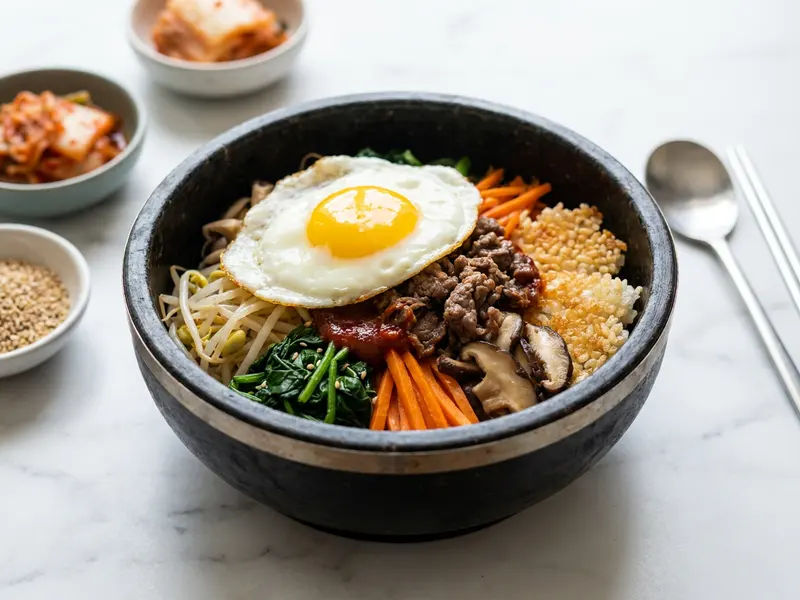
Dolsot bibimbap
Dolsot bibimbap · ready in 55 min · 4 servings · 724 kcal per serving · medium · 13 ingredients
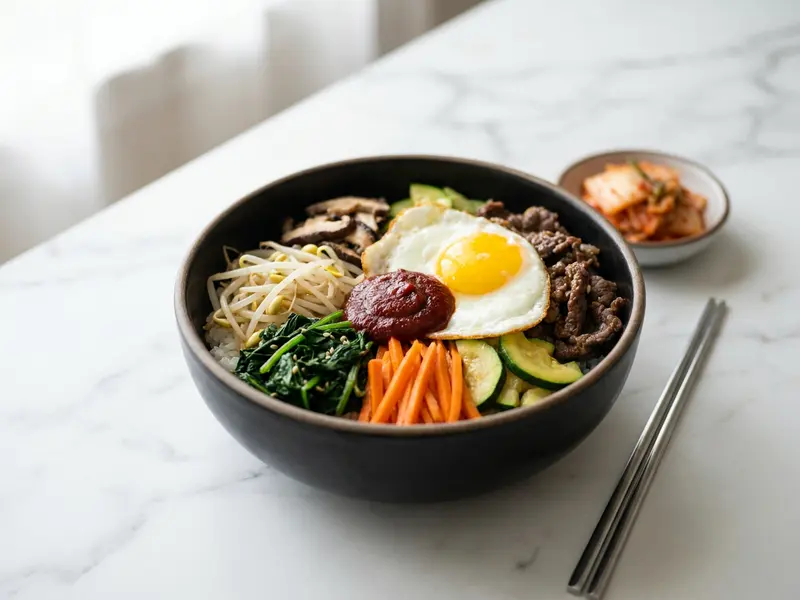
Dolsot bibimbap arrives crackling in a heated stone bowl, where tender rice turns into nutty nurungji under savory beef, namul, egg, and gochujang.
- Prep
- 20 min
- Cook
- 35 min
- Total
- 55 min
- Serves
- 4
- kcal
- 724
- Difficulty
- medium
Ingredients · 4 servings
- 360 gRice, rinsed
- 600 mlWater
- 500 gNamul, prepared
- 240 gBeef, thinly sliced
- 4Egg
- 4 tbspGochujang
- 2 tbspSesame oil, divided
- 1 tbspVegetable oil
- 4 cloveGarlic, minced
- 2 tbspSoy sauce
- 2 tspSugar
- ¾ tspSalt, divided
- ½ tspBlack pepper, ground
Equipment
rice cooker, stovetop, measuring spoons, cutting board, knife, mixing bowl, stone bowl, oven mitt, sieve, rice cooker paddle, rice cooker bowl, spoon
Instructions
- Mise en place
Gather the rice, namul, beef, eggs, sauces, oils, and seasonings, then set out 4 stone bowls, a rice cooker, skillet, bowls, spoons, and mitts. · 5 min
What to look for: All ingredients are measured and tools are within reach.
- Cook rice
Rinse the rice in cool water until the water runs mostly clear, then cook it with 600 ml water until tender and steamy. · 25 min
What to look for: Rice grains look glossy, plump, and fully steamed.
- Season beef
Mix beef with soy sauce, sugar, garlic, black pepper, and 1 tsp sesame oil, then rest it while the rice finishes cooking. · 10 min
What to look for: Beef slices are evenly coated and glossy.
- Cook beef
Heat vegetable oil in a skillet, add the marinated beef, and fry until browned with no pink spots visible. · 6 min
When it is done: Beef reaches 63°C / 145°F in the thickest slice.
- Fry eggs
Fry the eggs in the same skillet until the whites set and the yolks stay soft, adding a small pinch of salt. · 5 min
What to look for: Whites are opaque and yolks are still glossy.
- Heat bowls
Brush each stone bowl with sesame oil, set it over medium heat, and warm until a drop of water sizzles on contact. · 8 min
What to look for: Oil shimmers lightly and water sizzles immediately.
- Crisp rice
Divide the hot rice among the bowls, press it lightly against the base, and heat until a golden crust starts to crackle. · 7 min
What to look for: Rice crackles at the edges and a golden crust forms underneath.
- Add toppings
Arrange namul and beef over the rice, spoon gochujang in the center, and place 1 fried egg on each bowl. · 4 min
What to look for: Toppings sit in neat sections with gochujang centered.
- Serve sizzling
Serve immediately with the remaining sesame oil, then mix at the table so the sauce coats the rice and the crisp base breaks into bites. · 2 min
What to look for: The bowl is sizzling and the rice is streaked red after mixing.
Nutrition (per serving)
| kcal | 724 |
|---|---|
| Protein | 31 g |
| Carbohydrates | 93 g |
| of which sugars | 10 g |
| Fat | 26 g |
| of which saturated | 6 g |
| Fibre | 5 g |
| Sodium | 1615 mg |
Nutri-ScoreB
Allergens
Contains: gluten, eggs, soybeans, sesame, soy
Storage and reheating
- Fridge: up to 2 days
- Freezer: not recommended
- Reheat rice, beef, and namul in a lightly oiled skillet until steaming hot, then add a freshly cooked egg if possible.
Ingredient substitutions
Rice
- Short grain rice: Best choice for a sticky texture and crisp stone bowl base.
Namul
- Seasoned namul: Use a classic assortment of prepared namul for the most authentic bowl.
Beef
- Egg: Use extra egg only if avoiding beef, though the flavor becomes less savory.
Egg
- Beef: Use extra cooked beef if eggs are not suitable.
Gochujang
- Soy sauce: Use only if gochujang is unavailable, since gochujang defines the dish.
Sesame oil
- Vegetable oil: The nutty aroma will be reduced.