 QiMeal
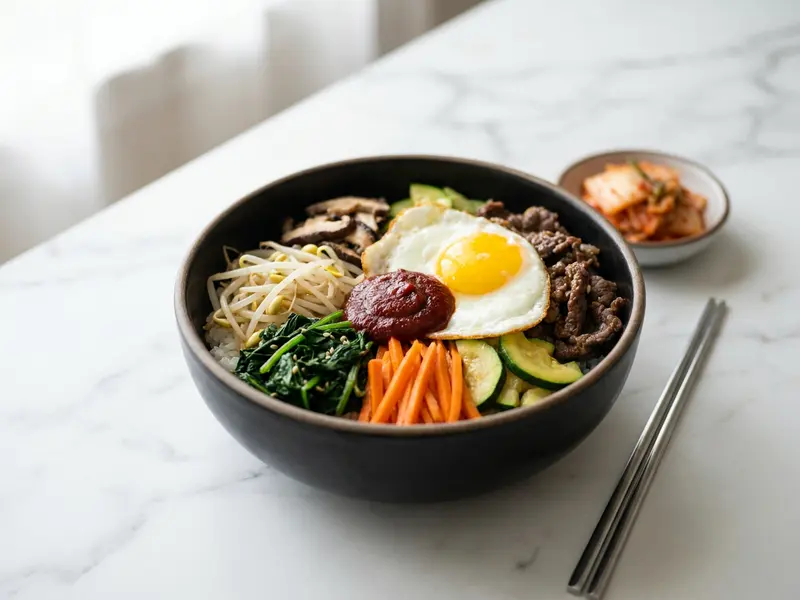
Bibimbap
Bibimbap · ready in 40 min · 4 servings · 774 kcal per serving · easy · 13 ingredients
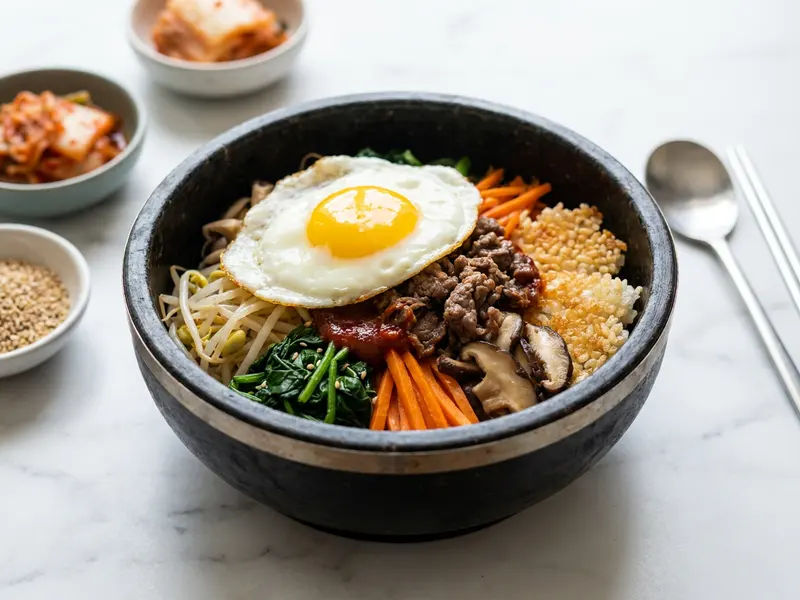
Bibimbap is Korea's signature mixed rice bowl, built for the joyful table ritual of stirring hot rice, seasoned namul, beef, egg and gochujang together.
- Prep
- 24 min
- Cook
- 16 min
- Total
- 40 min
- Serves
- 4
- kcal
- 774
- Difficulty
- easy
Ingredients · 4 servings
- 800 gSteamed rice, hot
- 600 gNamul, assorted and seasoned
- 300 gBeef, thinly sliced
- 4Egg, fried just before serving
- 100 gGochujang
- 36 gSesame oil
- 20 gVegetable oil
- 12 gGarlic, minced
- 45 gSoy sauce
- 12 gSugar
- 3 gSalt
- 1 gBlack pepper, ground
- 60 gWater
Equipment
stovetop, bowl, skillet, small bowl, mixing bowl, spatula, spoon, knife, cutting board
Instructions
- Prepare station
Gather the measured ingredients, 4 bowls, a skillet, a small bowl, a mixing bowl, a spatula, a spoon, a knife and a cutting board. · 5 min
What to look for: All ingredients and tools are within reach.
- Season beef
Combine beef with 30 g soy sauce, garlic, 6 g sugar, black pepper and 12 g sesame oil, then rest while you make the sauce. · 10 min
What to look for: Beef is glossy and evenly coated.
- Mix gochujang sauce
Stir gochujang with water, 15 g soy sauce, 6 g sugar and 12 g sesame oil until glossy and pourable. · 3 min
What to look for: Sauce is smooth, red and slightly loose.
- Build rice base
Divide hot steamed rice among bowls, season rice with salt and arrange namul in neat sections so each texture stays distinct. · 5 min
What to look for: Rice is covered with separate colorful namul sections.
- Cook beef
Heat vegetable oil in a skillet, add seasoned beef and fry quickly until browned, juicy and no longer pink at the center. · 5 min
When it is done: Beef reaches 63°C / 145°F in the thickest slice.
- Fry eggs
Fry eggs in the same skillet until whites are set and yolks remain soft, using the remaining 12 g sesame oil for aroma. · 6 min
What to look for: Whites are opaque and yolks are still glossy.
- Assemble bowls
Top each rice bowl with beef, 1 fried egg and gochujang sauce, keeping the sauce visible for mixing at the table. · 4 min
What to look for: Each bowl has rice, namul, beef, egg and red sauce on top.
- Serve bibimbap
Serve immediately and instruct diners to stir everything thoroughly until the rice turns red and glossy. · 2 min
What to look for: The mixed bowl looks evenly red, glossy and steaming.
Nutrition (per serving)
| kcal | 774 |
|---|---|
| Protein | 32 g |
| Carbohydrates | 85 g |
| of which sugars | 13 g |
| Fat | 34 g |
| of which saturated | 8 g |
| Fibre | 6 g |
| Sodium | 2241 mg |
Nutri-ScoreB
Allergens
Contains: gluten, eggs, soybeans, sesame, soy
Storage and reheating
- Fridge: up to 2 days
- Freezer: not recommended
- Reheat rice, namul and beef gently in a covered skillet, then add a freshly fried egg if possible.
Ingredient substitutions
Namul
- Assorted namul: Use a balanced mix of seasoned Korean vegetables.
Beef
- Assorted namul: This removes the beef but keeps the bowl hearty.
Egg
- Assorted namul: Use extra namul if eggs are avoided.
Gochujang
- Soy sauce: This is not classic but can season the bowl if gochujang is unavailable.
Sesame oil
- Vegetable oil: The aroma will be milder.
Vegetable oil
- Sesame oil: Use only if sesame is safe for diners.